


In 2026, the way people travel is shifting fast. Instead of one long annual holiday, many younger travellers are choosing short, high-impact trips that fit neatly into a weekend.
These are known as 2-day “intense” city breaks.
For Gen Z especially, travel is no longer about slowing down or ticking off every museum. It’s about stacked experiences, memorable moments, and cities that deliver a lot in a short time. Since most 2-day city breaks rely on quick, flexible flights, many Gen Z travellers compare short-haul routes and weekend fares using platforms like Skyscanner, especially when booking last minute.
These trips aren’t rushed. They’re intentional, carefully planned, and packed with variety.
Many fly out on Friday evening and return by Sunday night, turning a normal weekend into a mini adventure.
Travel trend reports for 2026 show rising demand for one- to three-night getaways that are easy to reach, walkable, and rich in experiences rather than luxury.
Surveys also suggest that Gen Z travellers prioritise cultural immersion, soft adventure, and visually striking places over traditional shopping or resort stays. This generation is comfortable booking trips spontaneously, often planning on the go using apps and AI tools. They look for destinations that feel authentic and local, not overly polished.
Street food, neighbourhood cafés, thrift shops, street art, and viewpoints discovered through TikTok or Instagram often matter more than famous landmarks.
In short, Gen Z travels for moments, not mileage. The goal is to maximise what you see and feel without wasting time commuting or backtracking.
In 2026, travel trend analysis highlights growing interest in compact, walkable cities and regional hubs where travellers can arrive quickly and spend most of their time exploring.
These trips work best when attractions are clustered, public transport is simple, and the city rewards wandering. Gen Z travellers often blend classic highlights with niche experiences: local markets, indie cafés, creative districts, waterfront walks, night markets, and scenic viewpoints. Rather than following rigid schedules, they move through cities “like playlists” stacking highlights with short, spontaneous side quests.
7 Destinations That Perfectly Fit a 2-Day Intense City Break in 2026
Not every city works for a short trip. The best ones deliver variety without long distances. Based on 2026 travel trends and city-break reporting, these seven destinations stand out.
1. Lisbon, Portugal
Lisbon consistently appears on Europe’s best city-break lists thanks to its compact historic centre, hilltop viewpoints, and iconic trams.
Neighbourhoods like Alfama, Baixa, Belém, and Bairro Alto can be comfortably explored over a weekend. Major airlines and tour operators also position Lisbon as a classic 2- or 3-night city break for 2026.
Tram rides, miradouros, riverside sunsets, and food markets stack easily into two full days.
2. Seville, Spain
Seville is frequently highlighted as one of Europe’s most rewarding short-break cities, especially in cooler months.
Most major attractions sit close together in the historic centre, including the Real Alcázar, Seville Cathedral, Plaza de España, and the Santa Cruz district.
Palaces, tapas streets, river walks, and flamenco evenings all fit naturally into a tight 48-hour plan.
3. Budapest, Hungary
City-break guides for 2026 regularly list Budapest as one of Europe’s best value destinations.
In just two days, travellers can combine Buda Castle, Fisherman’s Bastion, the Parliament area, thermal baths, and evenings in the ruin bars.
You can balance intense sightseeing with recovery time in thermal baths, all within a compact city layout.
4. Prague, Czech Republic
Prague remains a favourite for culture-focused weekend trips. Travel reports describe it as a city where the Old Town, Charles Bridge, castle district, and riverside walks can be experienced comfortably over two days.
The historic core is walkable, visually striking, and perfect for sunrise, sunset, and café-hopping without long travel times.
Travellers often book cross-border or regional rail journeys through Rail Europe, which helps reduce transit time and keeps trips more sustainable.
5. Hong Kong (China SAR)
Hong Kong is increasingly highlighted in 2026 trend pieces for its dense urban energy and vertical experiences.
In two days, visitors can realistically fit Victoria Peak, the Star Ferry, harbour views, night markets, and at least one major neighbourhood such as Central or Mong Kok.
Efficient transport, late-night culture, and high-density attractions allow a truly experience-packed weekend.
6. Cork, Ireland
Emerging destination lists for 2026 name Cork as a rising city for Gen Z and Millennial travellers.
Known for its food scene, markets, riverside walks, and relaxed local vibe, Cork offers a compact alternative to larger European capitals.
Its size makes it ideal for a focused, food-driven weekend without crowds or long commutes.
7. Seoul, South Korea
Asia-focused travel trends for 2026 highlight Seoul as a city where culture, nightlife, and technology collide.
Travellers can see historic palaces, traditional villages, trendy districts, cafés, and night markets in just two days thanks to fast public transport and long opening hours.
Seoul’s neighbourhood diversity and non-stop energy suit Gen Z’s preference for intense, highly shareable experiences.
How to Structure a 2-Day Intense City Break
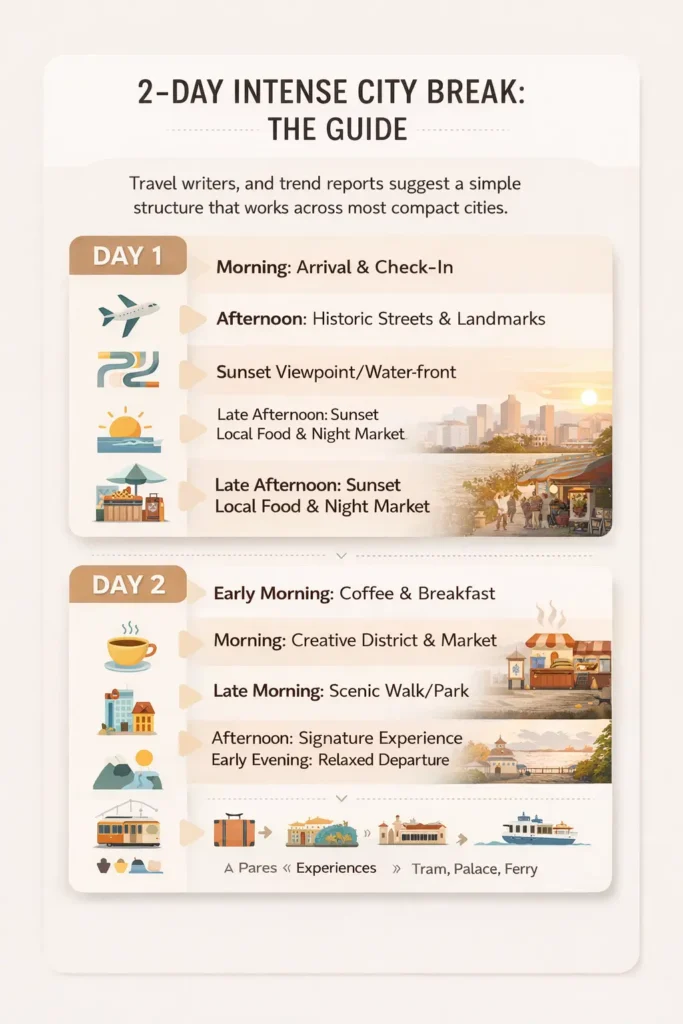
This approach mirrors how Gen Z plans trips in 2026: flexible, experience-led, and focused on moments rather than checklists.
Practical Tips for Gen Z and Weekend Travellers
Recent research shows that budget control, flexibility, and digital tools are central to Gen Z travel habits.
For short trips, experts recommend booking transport and accommodation early while keeping daily plans loose.
Choosing centrally located stays reduces transit time and allows more walking. Street food, bakeries, and casual local eateries not only save money but also offer more authentic experiences.
Many Gen Z travellers also prefer sustainable options, such as trains instead of flights where possible, locally owned accommodation, and activities that support neighbourhood businesses.
Many Gen Z travellers prefer hostels or budget boutique stays they can book through Hostelworld, especially for walkable city centres.
In 2026, travel isn’t about how long you go. It’s about how much you experience in 48 hours.
For Gen Z, 2-day intense city breaks deliver freedom, variety, and memorable moments without long planning cycles or big budgets. As cities adapt to this trend, short, experience-packed weekends are becoming one of the defining ways young travellers explore the world.