

Planning a European trip and worried about a Schengen visa refusal? You’re not alone: in recent years roughly one in seven applications has been rejected worldwide, often for avoidable reasons.
Here’s a practical, traveller‑friendly guide you can publish on your website.
1. Weak or No Travel History
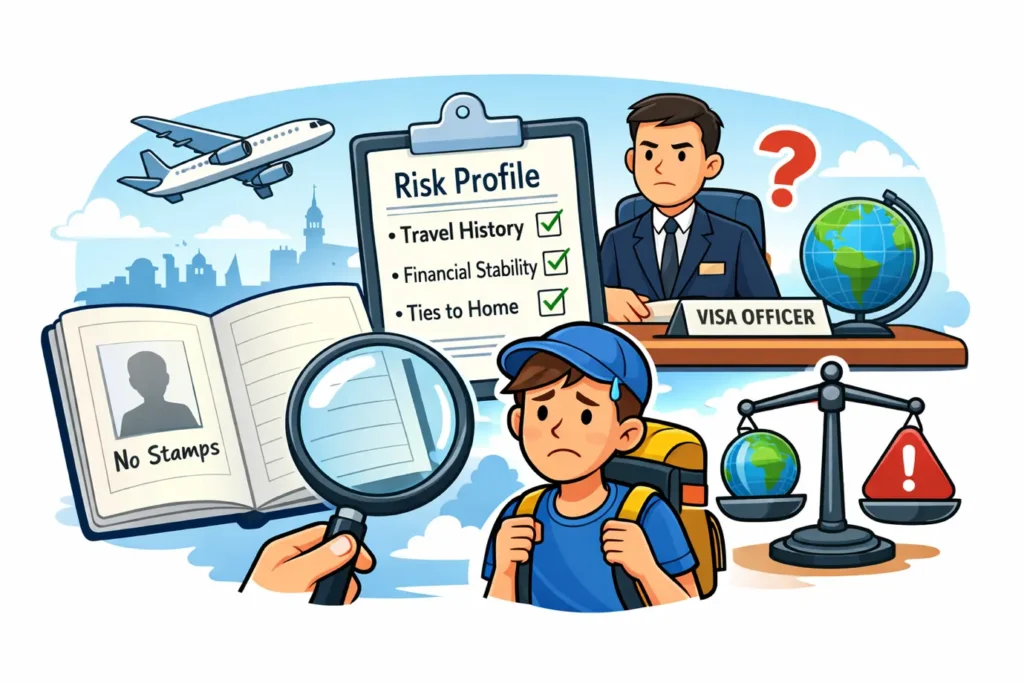
For many first‑time travellers, an empty passport feels like a curse but it doesn’t have to be. Visa officers look at your overall risk profile, and limited travel history is just one of several factors they consider.
How to strengthen this area:
- Start with easier destinations that issue visas more readily to your nationality, then build up a record of trips you completed and returned from on time.
- Keep old passports with previous visas and entry/exit stamps; they help show a pattern of respectful travel, even if they’re not Schengen trips.
- If you truly have zero history, compensate with stronger documentation for funds, employment and itinerary.
2. No Strong Ties to Your Home Country
One of the most common refusal grounds is that the consulate is not convinced you will return home after your visit. They are required to assess your “intention to leave the Schengen Area,” and weak ties can signal overstay risk.
Evidence that helps:
- Stable employment: job contract, recent payslips, approved leave letter, business registration documents for self‑employed applicants.
- Family and social ties: marriage certificate, children’s birth certificates, proof of dependents, or other responsibilities that require your presence at home.
- Long‑term commitments: property ownership or long‑term lease, ongoing education, or other obligations that anchor you to your country.
If you are unemployed, work informally, or have just relocated, be honest but thorough in explaining your situation and show additional evidence of future plans back home.
3. Vague or Unconvincing Travel Itinerary
“Purpose of travel not properly justified” is another formal refusal reason across Schengen states. Many applicants submit generic bookings and a one‑line explanation like “tourism,” which can look unprepared or fabricated.
Planning your Schengen trip? Use Skyscanner to compare flights from dozens of airlines and find the best fares for your visa dates.
Book European train tickets and rail passes with Rail Europe.
How to build a strong itinerary:
- Provide a day‑by‑day outline: cities you’ll visit, approximate dates, main activities (sightseeing, museum visits, business meetings).
- Attach proof for key items: confirmed or cancellable hotel reservations, internal transport bookings, or invitations from hosts or event organisers.
- Keep your story consistent: dates and cities must match across your application form, flight reservations, accommodation, insurance and bank statements.
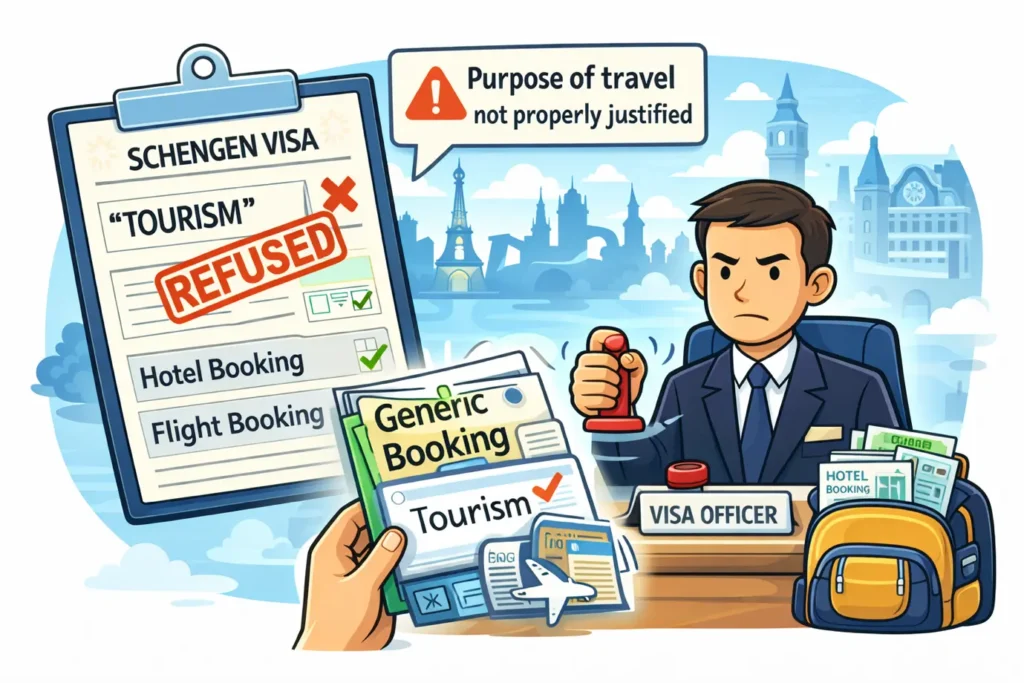
Even if you like spontaneous travel, for visa purposes you need to show a clear, coherent plan that proves you are a genuine short‑term visitor.
4. Insufficient or Unclear Proof of Funds
Money is a major factor. Recent studies show that “insufficient means of subsistence” is one of the leading categories of Schengen visa refusals. Each country sets reference amounts for how much you must have available per day of stay.
Typical expectations:
- Many Schengen states require roughly €50–€120 per day, with higher amounts if you do not have prepaid accommodation or a sponsor.
- Consulates usually ask for 3–6 months of bank statements to assess whether your income and savings are stable and legitimately sourced.
Tips to avoid red flags:
- Avoid unexplained, last‑minute large deposits; if they exist, attach a clear explanation and supporting documents (for example, sale of a car, bonus from employer).
- Make sure the name on the account matches the applicant, or submit proper sponsorship documents if someone else is funding the trip.
- Show additional assets if available, such as fixed deposits or investment accounts, especially for longer stays.
While visa rules still focus on documents, open‑source checks are becoming more common.
In Germany, for example, police guidance explicitly mentions using publicly available social media to verify applicants’ jobs, travel history and accommodation claims, especially in fraud‑risk cases.
What this means in practice:
- Public posts that openly contradict your application (e.g., “I’m moving permanently to Europe on a tourist visa”) can raise questions about your true intentions.
- If your profiles are public, keep them consistent with your declared occupation, travel purpose and length of stay.
- You do not normally need to provide passwords or private access; checks focus on information that is already publicly visible.
This is not an official checklist for every embassy, but it’s wise to remember that what you post online can be seen by decision‑makers.
6. Incomplete, Inconsistent or Suspicious Documents
From missing signatures to mismatched dates, document issues are another major reason applications fail. In serious cases, forged or altered documents can lead to long‑term bans in addition to refusal.
Common pitfalls:
- Different travel dates across your form, flight bookings, hotel reservations and travel insurance.
- Name spelling errors that make it hard to link documents to you.
- Missing required items: medical insurance with at least €30,000 coverage across the entire Schengen Area, confirmed accommodation, or a signed invitation letter when applicable.
Before submission, review your file like a visa officer would: does every claim in the form have supporting evidence, and do all the dates, names and numbers align?
7. Reapplying Without Fixing the Real Problem
Many travellers respond to a refusal by quickly reapplying with the same documents and a different appointment date. Unfortunately, consulates keep records, and repeated identical applications usually receive the same outcome.
Smarter way to reapply:
- Study the refusal letter carefully; Schengen states must indicate the main refusal ground using standard wording.
- Address that specific weakness: if it was funds, build a longer savings history; if it was unclear travel purpose, refine your itinerary and add stronger supporting documents.
- Consider consulting an experienced visa adviser or migration lawyer if you’ve had multiple refusals or if the reason is complex (for example, security flags or overstay history).
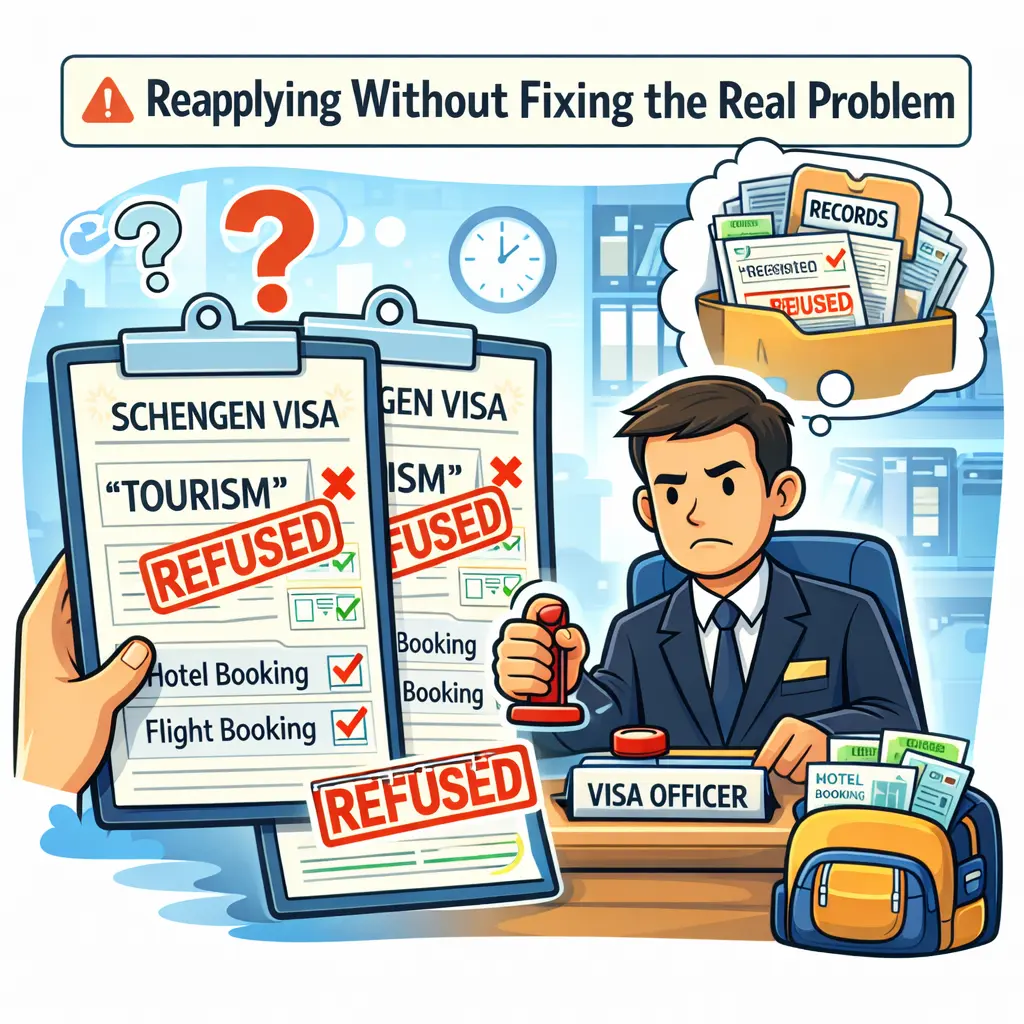
Taking time to rebuild your file shows seriousness and can significantly improve your chances next time.
Final tips for a stronger Schengen application
Apply to the country that is truly your main destination or longest stay, not just the one with the earliest appointment slots.
Keep everything consistent: forms, bookings, finances, insurance and your spoken answers at the interview should tell the same story.
Remember that there is no single magic factor; visa officers weigh your entire profile including travel history, ties, funds and credibility to decide.